 Current issueTarget
Microbiology · Yogurt
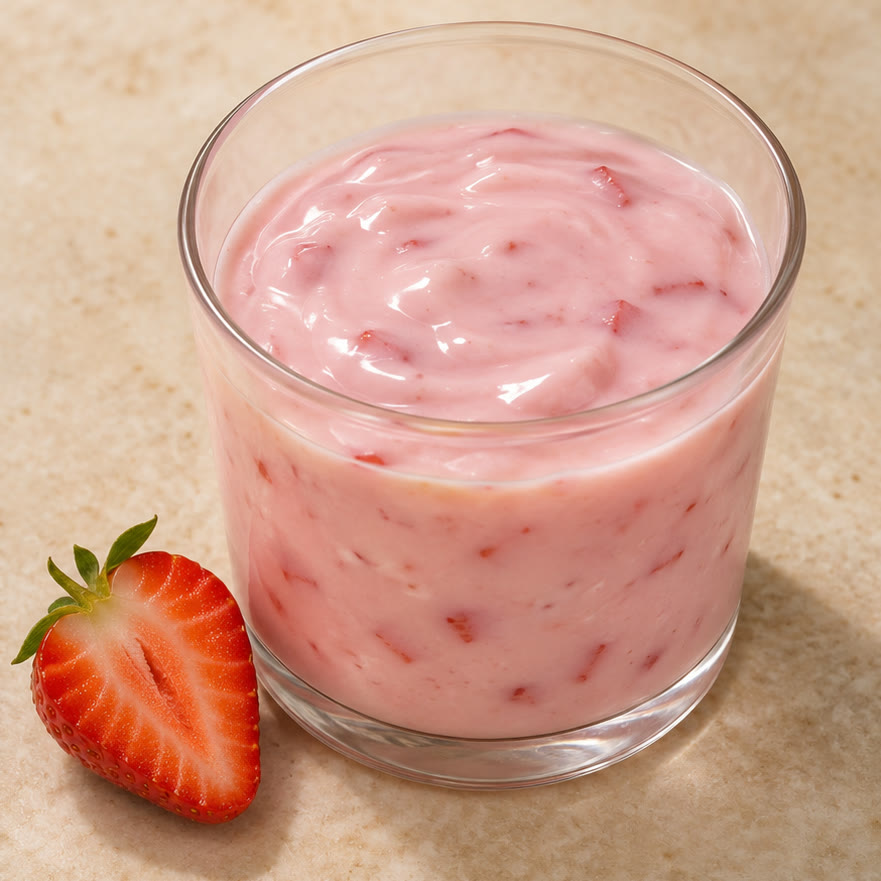
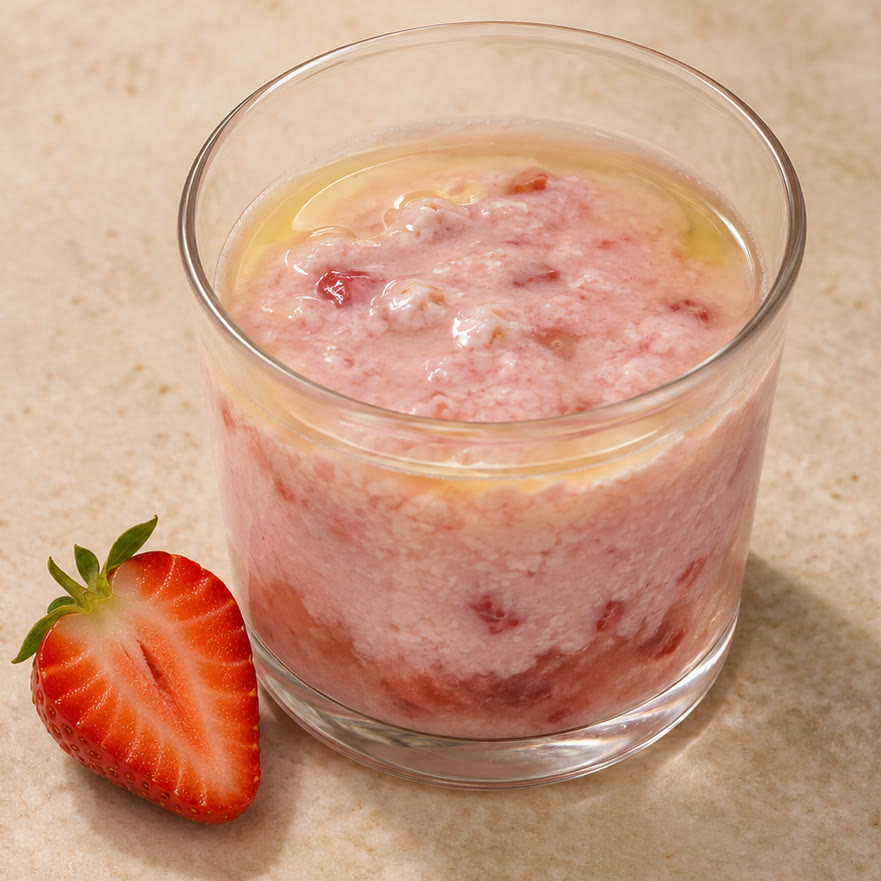
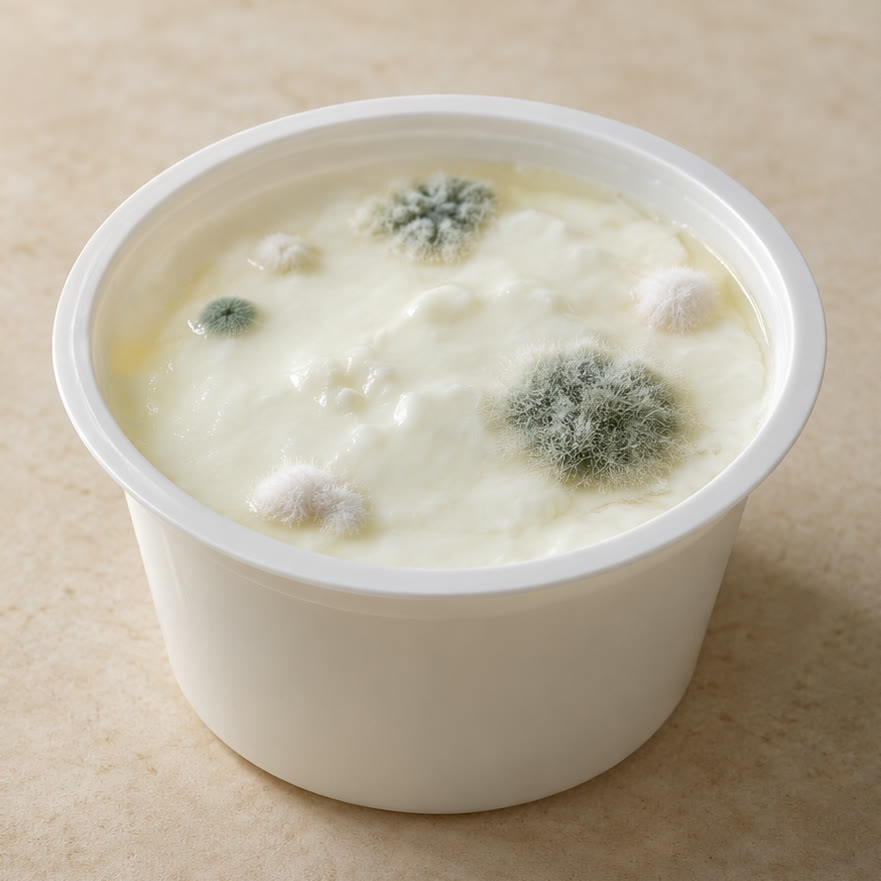
Yogurt with mold and yeast on the surface before its date
- 1Blue-green mold colonies growing on the yogurt surface
- 2White, fuzzy colonies from mold or yeast contamination
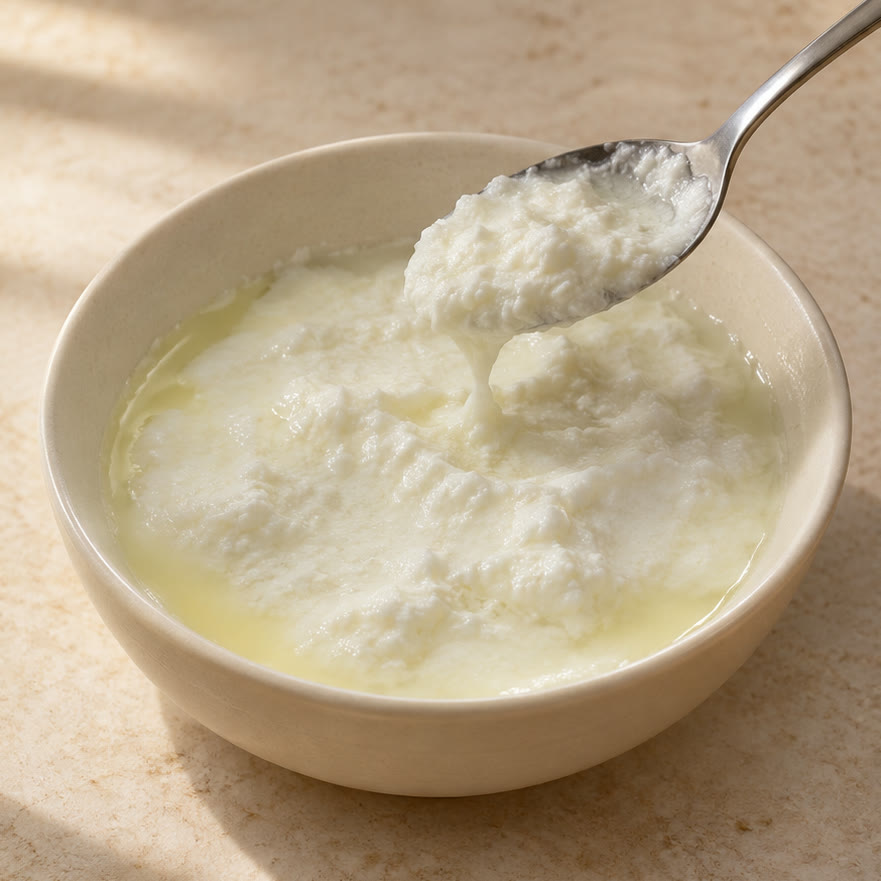
- 3Whey and a yeasty, fermented smell; swollen lids and early complaints
- Usual causes
- Post-pasteurization contamination at the filler, mold spores in filling-room air, contaminated cups or lid foil, poor lid sealing, headspace condensation, temperature abuse in distribution
- What we review
- Yeast and mold counts (CFU/g) by filling time and head, air settle plates in the filling room, ATP and swabs on filler nozzles and lid magazines, packaging supplier CoA, seal integrity tests, cold-chain records
- Typical levers
- Filler hygiene and CIP validation, HEPA or positive-pressure air over the filler, packaging handling and supplier specs, seal settings, environmental monitoring plan, shelf-life testing at abuse temperatures